26.10 - Monthly Release
Focused Run Result Exports
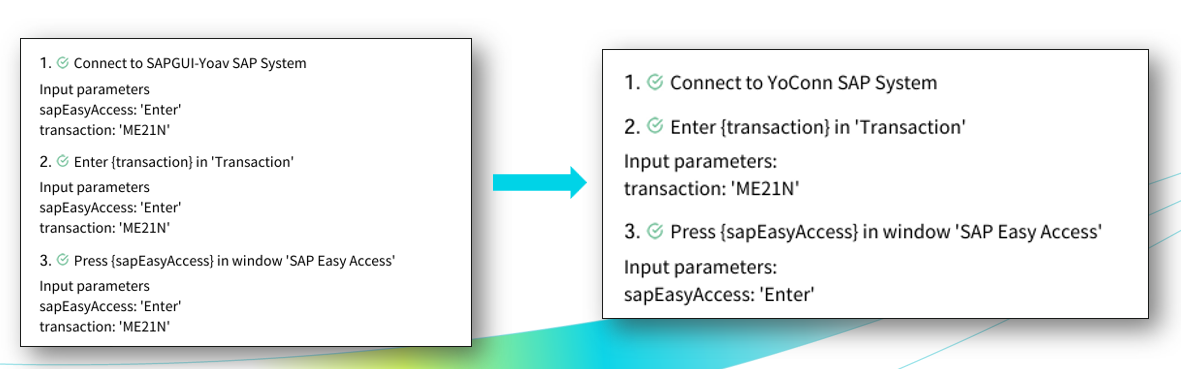
Review exported run results faster with exports that show only what matters. Each instruction now includes only its relevant inputs, outputs, or internal parameters.
Unresponsive Agent Notifications
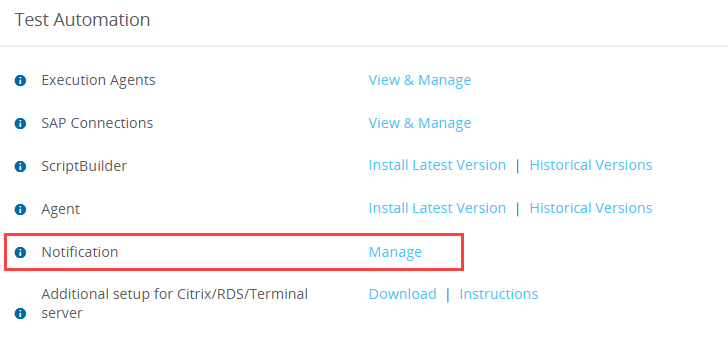
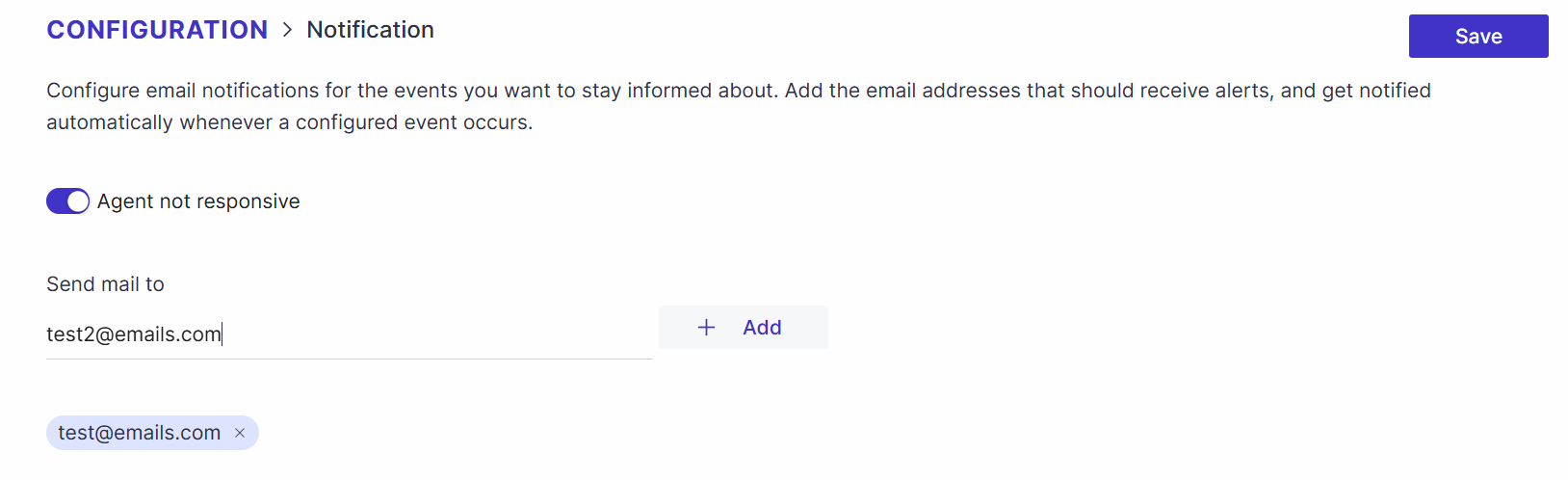
Act on execution agent issues before they affect your test runs. Configure email notifications in Settings > Configuration > Notification to alert one or more recipients when an agent stops responding.
Learn more
26.09.105 - Monthly Release
Greater Visibility into Script Version Conflicts
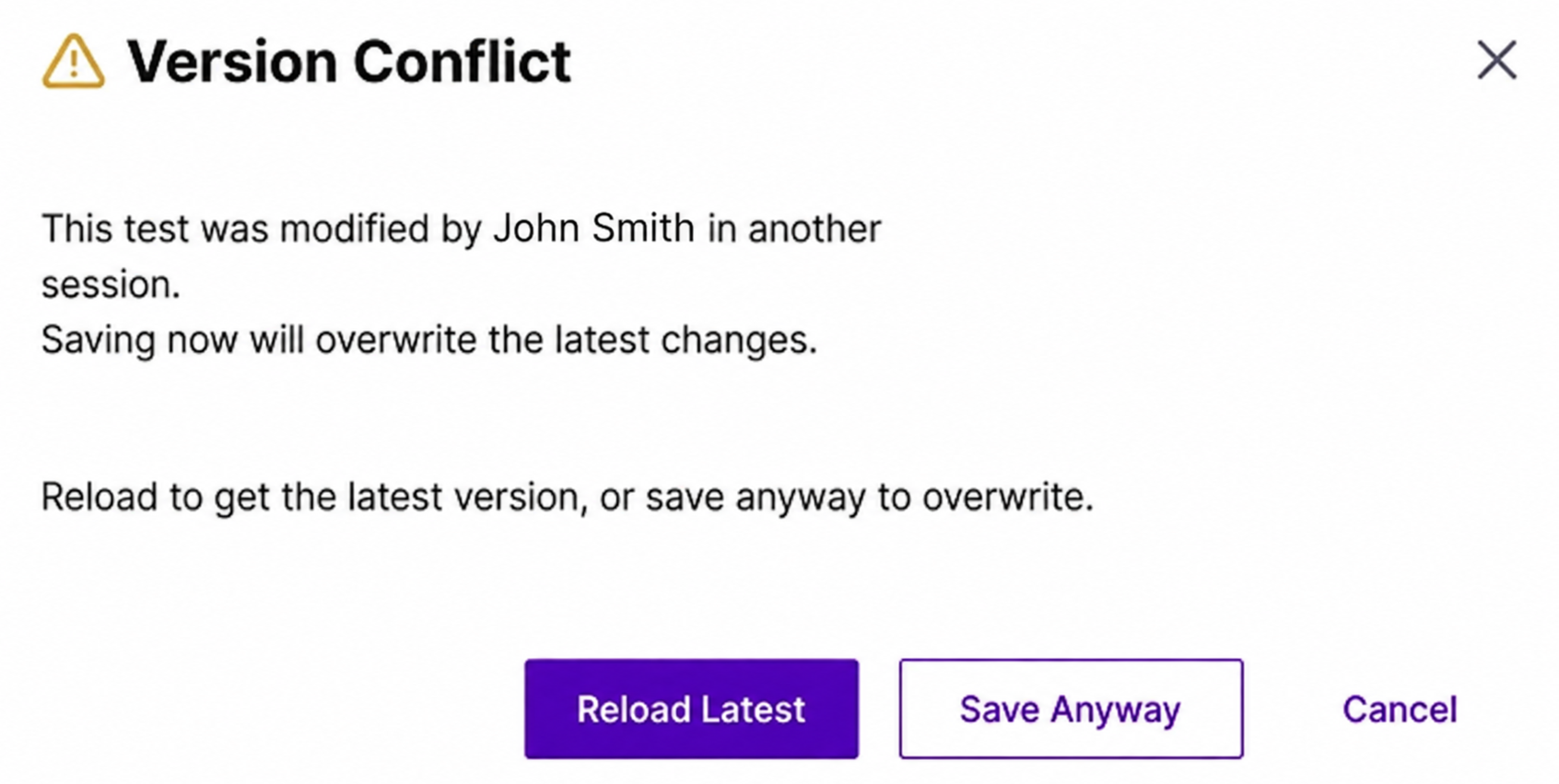
Protect your automated test changes with built-in version conflict detection, helping teams collaborate confidently in ScriptBuilder without accidentally overwriting newer updates.
Panaya now detects when a newer version of the script has been saved in another session before your changes are saved. When a conflict is found, you can Reload Latest to continue from the most recent version or choose Save Anyway to intentionally overwrite it.
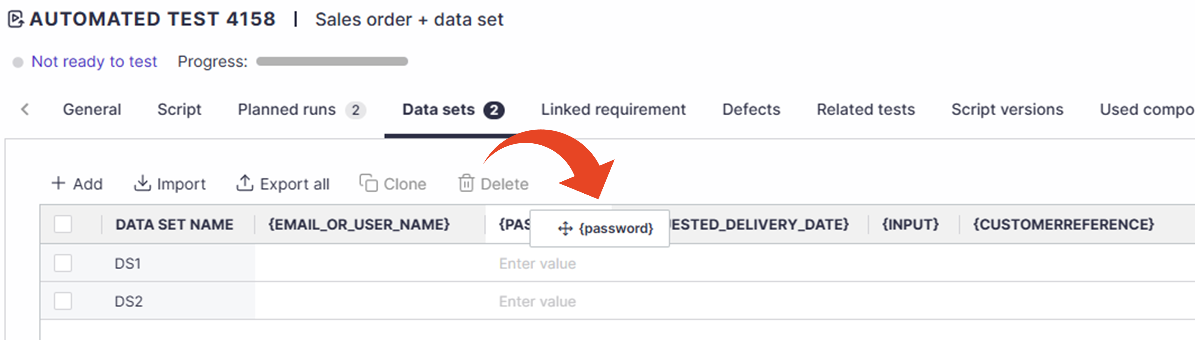
Customize Data Set Table Layouts
Make automated test data sets easier to work with by customizing the column order and widths in the Data Sets tab. The layout is kept for users in all tests and future logins.
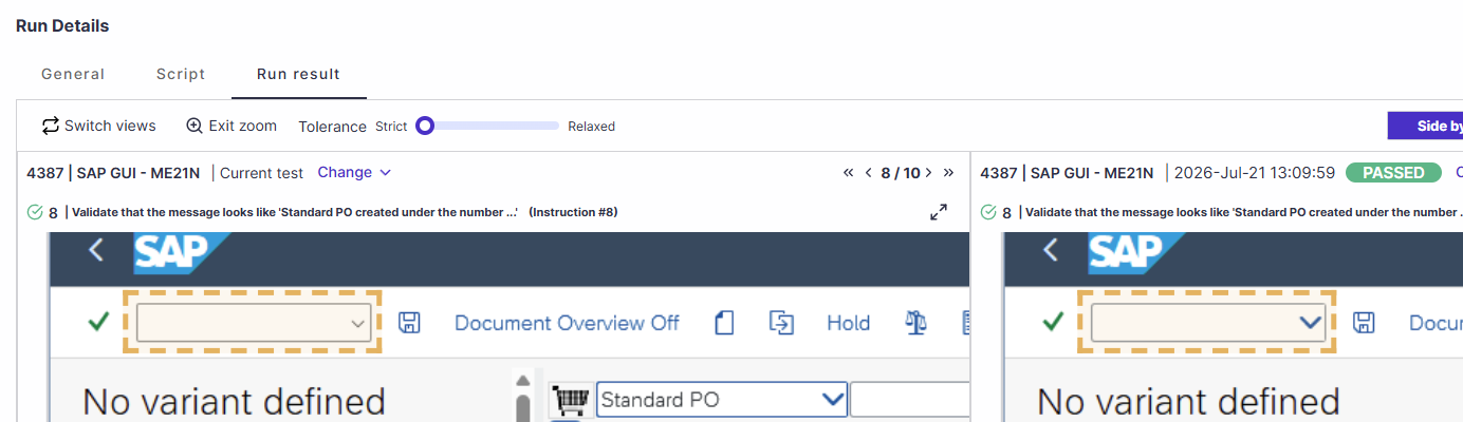
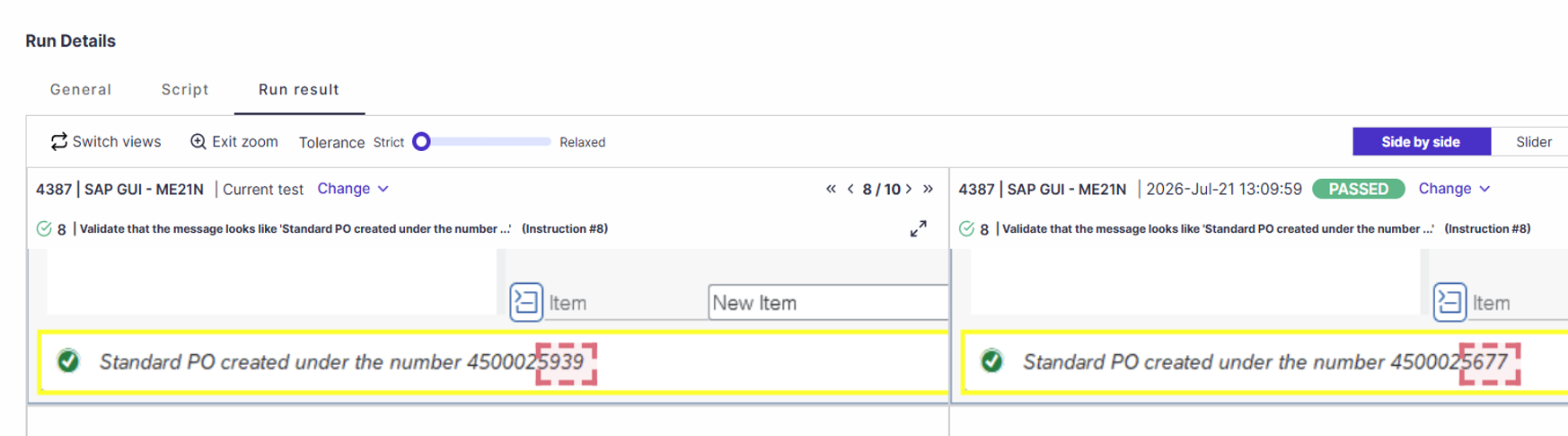
Faster Screenshot Comparison with Detected Change Regions
Identify visual differences between automated test runs more quickly with enhanced Compare Mode. Panaya now automatically detects differences between screenshots and highlights them as regions in both the screenshots and a dedicated list.
Detected regions are categorized as Layout, Style, or Content, making it easier to understand whether a difference is structural, visual, or related to the displayed values. Users can also adjust comparison sensitivity using the Strict to Relaxed tolerance control.
Automatic SAP Fiori Entry Point Identification
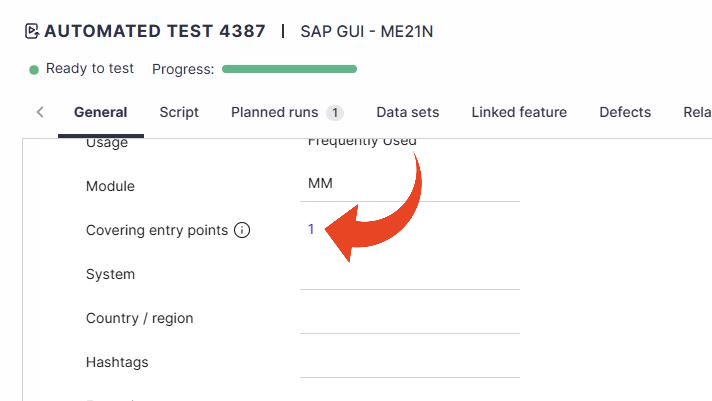
Extend change impact coverage to SAP Fiori by automatically identifying the entry points covered during automated test execution.
When a test launches a GUI HTML application from SAP Fiori Launchpad, Panaya captures the corresponding transaction code. For SAPUI5 applications, Panaya captures the Fiori App ID.
These entry points connect your automated test coverage with SAP Change Analysis, helping teams understand which tests are relevant to impacted SAP changes across both SAP GUI and Fiori.
Configure the SAP Logon Language for Automated Testing
Support multilingual SAP testing more easily by defining the SAP Logon language directly in the SAP Connection.
The configured language is used when establishing the SAP connection, allowing automated tests to run in the required SAP Logon language.
26.08.105 - Monthly Release
Import Worksoft SAP GUI Scripts
Accelerate your automation journey by converting Worksoft SAP GUI exports into Panaya automated tests. This import capability transforms Worksoft artifacts into runnable, locator-based Panaya scripts, supporting both flat and componentized structures, as well as single and bulk imports.
This feature is currently available as a Beta. To participate in the Beta program, please contact Panaya support to request access.
Last Test Runs Status Indicator
Spot unstable or flaky tests directly from the test list with a visual summary of the last 10 automated runs. Each status bar represents a Passed, Failed, or Skipped execution, with the newest result shown on the right and highlighted for quick recognition.
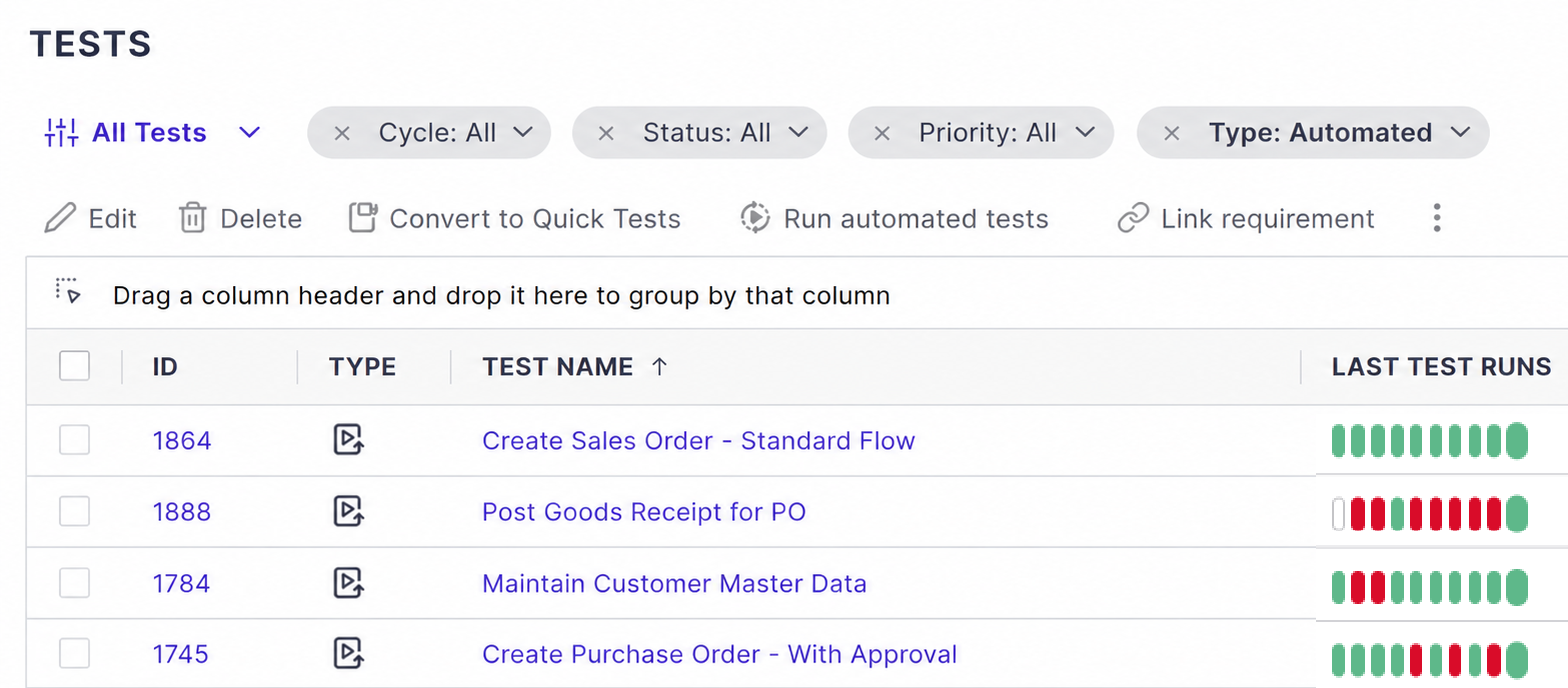
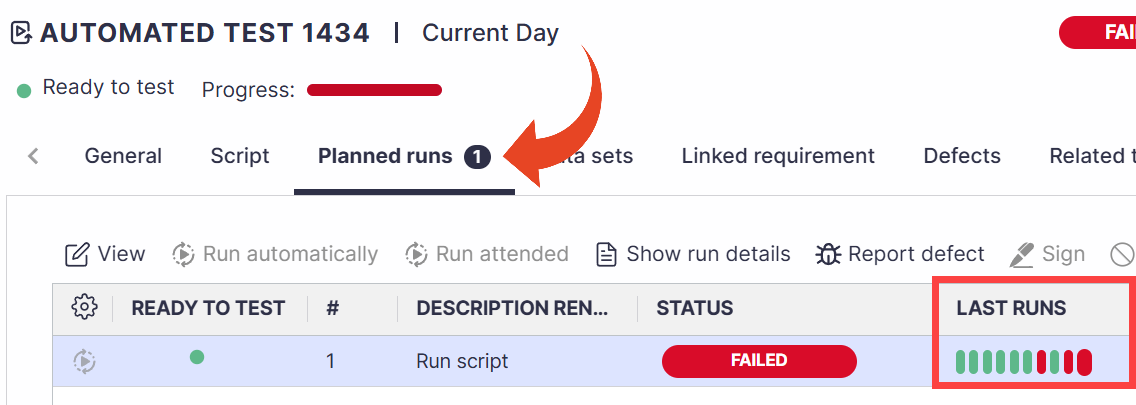
Select any run to open its planned run details. For tests with multiple planned runs, Panaya displays a neutral indicator and directs users to the test for a complete execution view.
Enhanced Comparison Experience
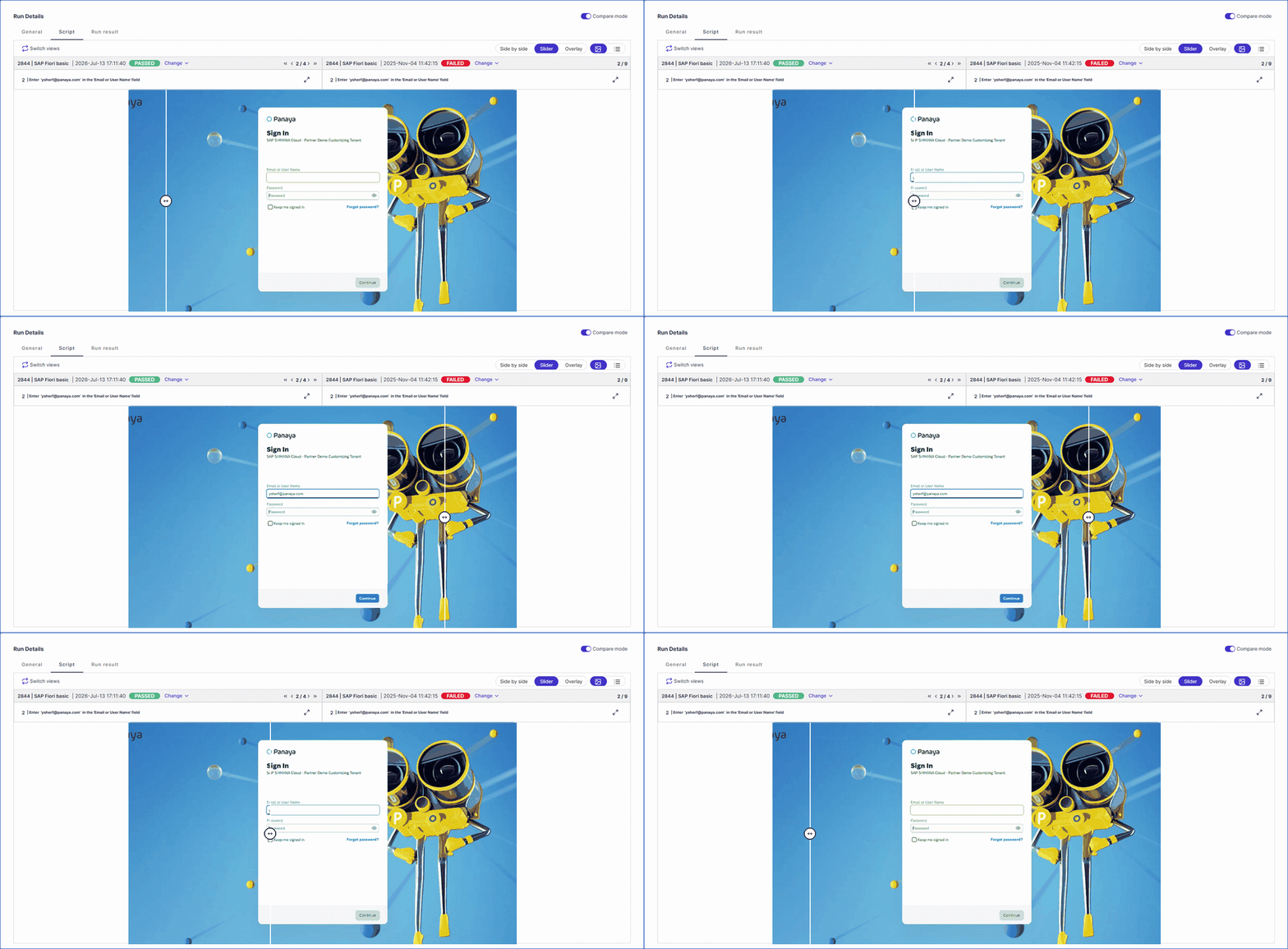
Run details Compare mode now offers a more intuitive comparison experience with improved navigation, a larger viewing area, and a new interactive Slider view for identifying visual differences between executions.
Rerun Timeout-Expired Executions
Long-running execution queues no longer require manual recovery. We added the option to rerun executions that were skipped after exceeding the 24-hour agent timeout, making it easy to continue large-scale automation runs without restarting the entire execution.
This is especially valuable for high-volume executions where queued tests may expire before an agent becomes available.
Test Set Traceability
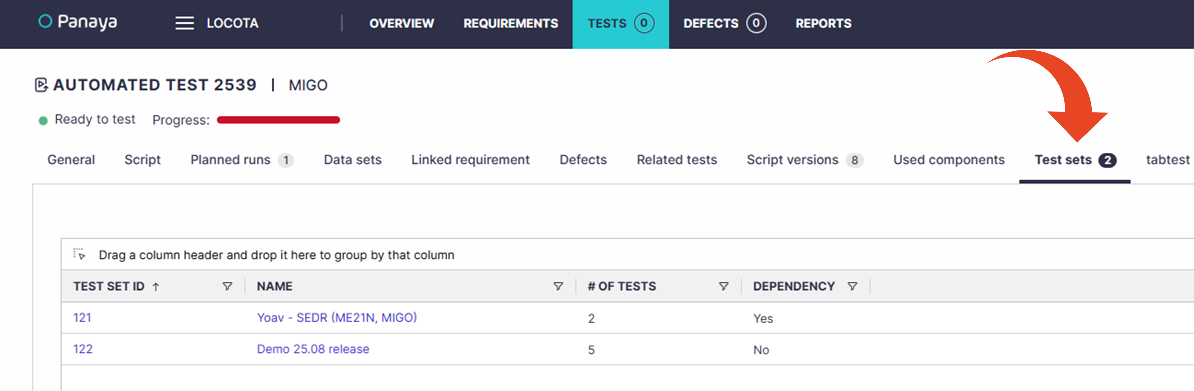
Gain complete visibility into where your automated tests are used in Test Sets. The new Test Sets tab shows every test set a test belongs to and indicates whether it participates in a dependency chain, making it easier to understand execution context, assess change impact, and maintain complex automation suites.
Clickable Components in the Script Tab
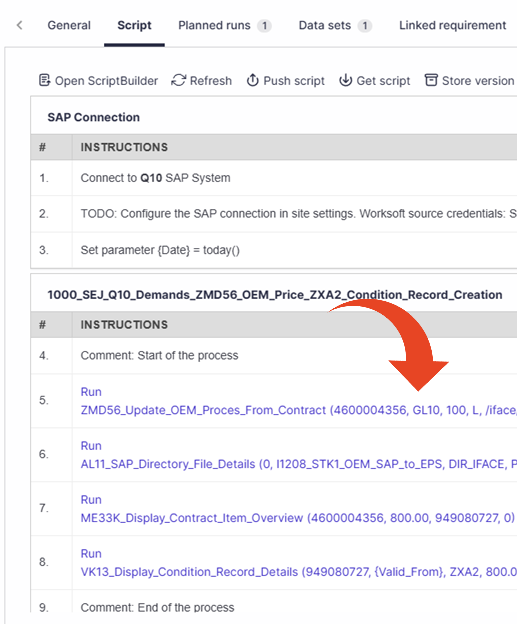
Navigate complex automation scripts more efficiently with clickable component names in the Script tab. Open any referenced component in a new browser tab with a single click, making it easier to review, troubleshoot, and navigate large, component-based test scripts.
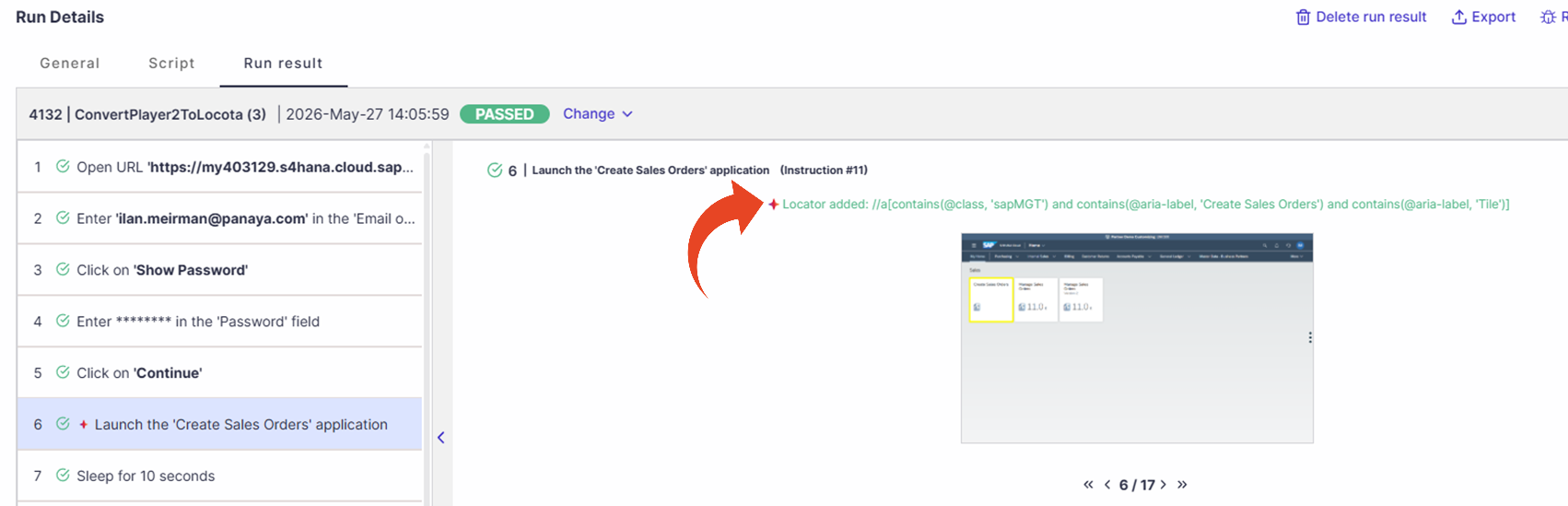
AI Self-Healing Indicators in Run Results
Identify AI-assisted execution steps at a glance. When AI Self-Healing enables an instruction to pass, a clear indicator now appears beside that instruction in Run Results, making it easier to review healed steps, understand execution behavior, and troubleshoot automation with greater transparency.
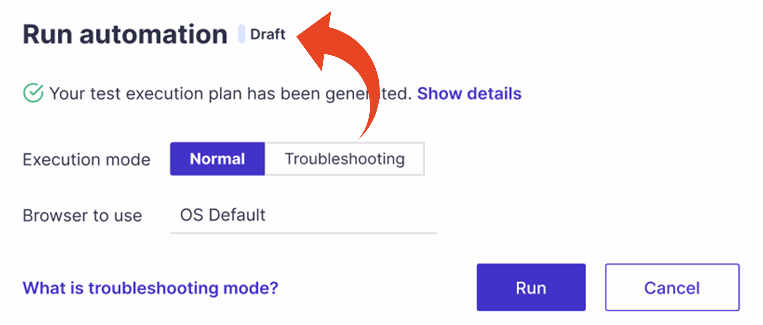
Draft Execution Label
Draft executions are now clearly labeled across the automation workflow, including the run automation dialog, planned runs, run history, and Automation Executions page. This makes it easier to distinguish draft runs from published test executions wherever they appear.
ScriptBuilder: Highlight Important Screenshots
Speed up execution reviews by adding an optional comment to your “Take Screenshot” instructions. The comment is displayed with the captured image in both Run Details and the exported PDF, helping reviewers quickly identify the screenshots that require attention.
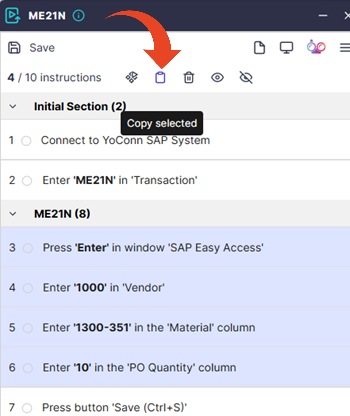
ScriptBuilder: Copy and Paste Multiple Instructions
Build and maintain automation scripts faster by copying and pasting a group of consecutive instructions in a single action. Selected instructions can be reused within the same test or transferred between tests and components, reducing repetitive work and making script creation more efficient.
ScriptBuilder: Script Settings & Properties
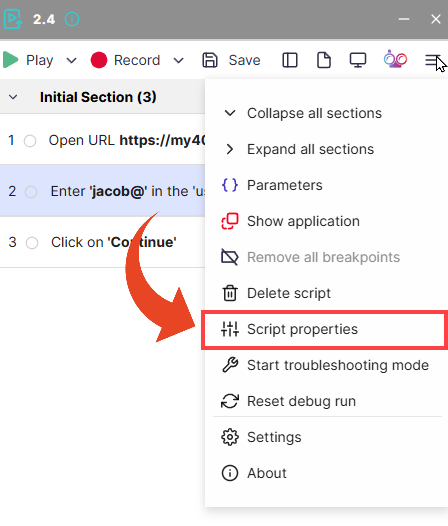
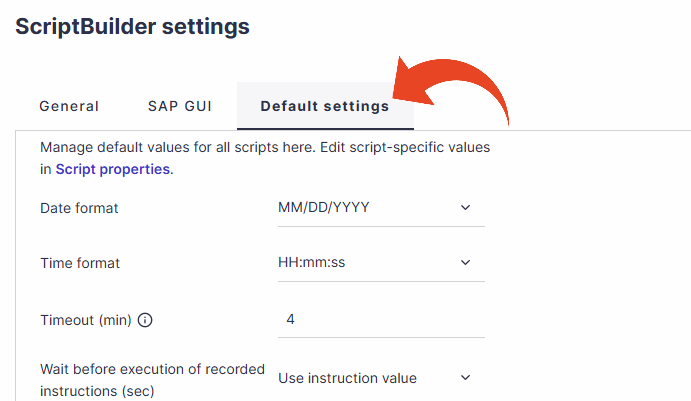
Script-specific properties and default settings are now clearly separated, with direct links between both areas. This makes it easier to understand which values apply only to the current script, manage defaults for new scripts, and move between settings without interrupting your workflow.
ScriptBuilder: Reference Global Parameters by Name
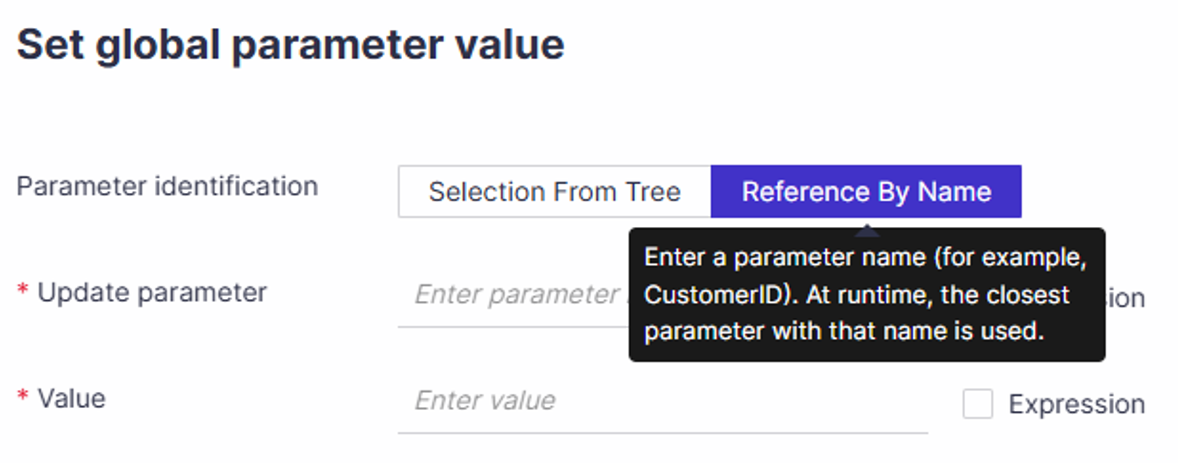
Make your automated tests more flexible and reusable by referencing global parameters by name. Panaya automatically resolves the nearest matching parameter at runtime, allowing the same test to run across different folders and project structures, using parameterization, without requiring script changes.
26.07.203 – Service Pack (Optional)
Extension Stability
This service pack resolves communication issues between ScriptBuilder/Agent and the browser extension following recent updates from browser vendors.
26.07.108 - Monthly Release
Convert Web Test Evidence into Automated Scripts (BETA)
Expanding on our SAP GUI evidence conversion capabilities, you can now automatically transform manual test evidence from web applications into automated test scripts.
The conversion is tailored to the detected application type, giving you a strong starting point for automation in just a few clicks. Once generated, the script can be reviewed, refined, and customized to match your specific testing requirements.
This feature is currently in BETA
Data set management permissions
Strengthen governance by controlling who can manage Test Automation data sets. We added a specific permission that limits modifications to data sets and input parameters. You can add this permission to a role and authorize users to edit script data sets.
Managing multiple execution agents for test automation just got easier. You can now update tags, assigned systems, and auto-update settings across multiple automation agents in a single operation, reducing repetitive administration and ensuring your agents stay consistently configured.
Test Sets multiple planned runs selection
Configure multiple planned runs for a single test to reduce duplication and simplify scheduling.
Following the introduction of the check-in/check-out mechanism, you can now execute checked-out script drafts before publishing them. Validate your changes using an execution agent or in attended mode to ensure updates work as expected before check-in. Clear draft indicators also make it easy to identify when an execution is using unpublished changes.
Learn more about Automated Tests Shared Editing Control


Enhanced automation support for Relish
Using Relish alongside your enterprise applications? We've enhanced our automation support for Relish to deliver broader coverage, improved compatibility, and more reliable execution, making it easier to automate and maintain your Relish-based business processes.
ScriptBuilder: Detailed execution progress for web applications
Troubleshooting web automation is now faster and more transparent. ScriptBuilder now provides detailed, real-time visibility into each step of web instruction execution.
Track element lookup, validation, AI-assisted recovery attempts, and detailed failure information as the execution progresses, making it easier to understand issues, identify root causes, and resolve failures more efficiently.

ScriptBuilder: SAP GUI Faster troubleshooting with compatibility warnings
Avoid unexpected automation issues before they happen. Playback now validates SAP GUI layout and metadata with the recorded setup and displays warnings when differences may affect automation reliability. Checks include changes to transactions, screens, UI themes, languages, and table types to simplify troubleshooting.

ScriptBuilder: SAP Connection settings revamp
A redesigned SAP Connection configuration pop-up improves usability by providing clear setup options, support for existing connection names, and an added SSO option.

ScriptBuilder: Execute Selenium code
Create advanced browser automation with the new Execute Selenium Code instruction, which enables custom C# code and direct access to the Selenium WebDriver. Built-in validation helps ensure safe and reliable execution.
26.06.200 – Service Pack (Recommended)
This release includes stability updates to the auto-update mechanisms for both the Agent and ScriptBuilder, ensuring consistent policy enforcement and seamless future deployments.
26.06.107 - Monthly Release
Manual Tests to Automated Tests Conversion (BETA)
Version Traceability
When converting manual test evidence into an automated test script, Panaya now automatically creates an initial version of the script that includes the conversion details.
This enhancement provides clear traceability of the origin of automated test scripts, making it easy to distinguish between versions created during the conversion process and those resulting from subsequent user modifications.
By logging the conversion as a new script version, teams gain improved auditability and visibility into the evolution of automated test assets.

When a manual test is converted into an automated test, Panaya now automatically creates a link between the new automated test and its source manual test. The original manual test is added to the Related Tests tab, providing clear traceability between the source and generated assets. This automatic linkage helps teams maintain context and simplifies navigation between related tests.

Execution Browser Selection
Panaya now provides greater control over automated test execution by allowing users to explicitly select the browser to be used for test runs.
Browser selection can be configured in the script settings, execution schedule, or when triggering on-demand executions.
This enhancement enables teams to align test execution with their target environments, improve consistency across test runs, and simplify validation across supported browsers.
Our team has introduced Check-In and Check-Out options, which provide greater control over automated tests and scripts editing and help prevent conflicting changes when multiple users work on the same automated script.
When a test is checked out, it is locked for editing by a single user, including its associated script and data sets. Changes made during checkout remain private until the user checks the test back in, at which point the updates are published, and a new test version is created.
Administrators can override and release locked tests when necessary, providing additional control in collaborative environments.
To improve visibility, Check-In and Check-Out information can now be added as columns in the test list, allowing teams to quickly identify test ownership and editing status.
To enable this feature, please contact Panaya Support.


Agent Remote Configuration
Agent management has been enhanced to support remote configuration and administration from the Panaya site, eliminating the need for direct access to the machine where the agent is deployed, simplifying ongoing agent maintenance and updates.
As part of this enhancement, agents are now managed at the Panaya subscription level, enabling centralized administration and assignment of agents to specific systems.
Agent records can also be removed directly from the agent management interface when no longer required.

Disabled Instructions in Script Version Comparison
Version comparison now highlights disabled instructions, making them clearly identifiable when reviewing changes between two script versions.
Disabled instructions are displayed with a dedicated indicator in the comparison view, providing greater visibility into script modifications and helping teams more accurately assess version differences during reviews and troubleshooting.
Run Details Export in Japanese
Run Details for automated test executions can now be exported in Japanese, enabling teams to generate execution reports in their preferred language.
This enhancement improves accessibility for Japanese-speaking users and supports localized reporting requirements when reviewing, sharing, and documenting automated test results.
ScriptBuilder: Validation Result Parameter Warning Handling
When a validation result is assigned to a parameter, ScriptBuilder now automatically enables the "Set as warning" option.
This enhancement ensures that validation instructions used to capture and store results for later use in the test do not unnecessarily stop execution when a validation condition is not met. Instead, the result is stored in the parameter, and the test continues, allowing subsequent steps to evaluate and act on the captured value as intended.
ScriptBuilder: New Date Formats and Functions
ScriptBuilder now supports additional date formats and introduces new date conversion functions to simplify handling dates across different applications and test scenarios.
New supported formats include -
ddd, dd MMM, yyyy (for example: Thu, 23 Apr, 2026)
dd MMM, yyyy (for example: 23 Apr, 2026)
Two new functions have been added -
str_to_date(text, format)
Converts a text value into a ScriptBuilder date.date_to_str(date, format)
Converts a ScriptBuilder date into a formatted text value.
These enhancements make it easier to work with application-specific date formats, reduce the need for custom expressions, and improve test portability across systems that use different date representations.
ScriptBuilder: New Number Formats and Conversion Options
ScriptBuilder now supports additional number formats and extends its number conversion functions to handle locale-specific formatting.
Supported formats include -
English format - 1,234.56
European format - 1.234,56
The following functions have been enhanced with optional group and decimal separator parameters -
str_to_num(text [,group_separator, decimal_separator])
Converts a formatted text value into a numeric value.num_to_str(number [,group_separator, decimal_separator])
Converts a numeric value into a formatted text representation.
These enhancements simplify working with regional number formats, improving compatibility with global applications and reducing the need for custom formatting logic when processing numeric values across different locales.
ScriptBuilder: New String Manipulation Functions
ScriptBuilder now includes two new text functions that simplify common string manipulation tasks within expressions -
replace(text, old_value, new_value)
Replaces all occurrences of a specified value with a new value.remove(text, value)
Removes all occurrences of a specified value from a string.
These functions make it easier to transform, clean, and standardize text values easily, helping simplify test logic and parameter handling.
ScriptBuilder: Checkbox and Dropdown Instructions for Windows Applications
To expand automation coverage for Windows-based applications, ScriptBuilder now provides two new instructions -
Set checkbox value in Windows application
Sets a checkbox to a checked or unchecked state.Select dropdown value in Windows application
Selects a value from a dropdown list.
These additions enable automation of common desktop application interactions, helping create more complete end-to-end business process scripts that span web, SAP, and Windows applications.
ScriptBuilder: Execute Code Productivity Enhancements
The Execute Code instruction has been redesigned to streamline JavaScript generation and execution within automated scripts.
The new unified interface combines code generation and execution, supports enriched prompts with additional Panaya context, and allows screenshots and DOM information to be included as generation context. JavaScript can be regenerated with a single click and executed directly from the instruction pop-up, making it faster to create, refine, and validate custom automation code.

ScriptBuilder: SAP GUI Location Locators
We added a Location Locator that can identify SAP GUI elements based on their on-screen position. During recording, the element’s coordinates are captured automatically and added to the locator list. During playback, the system uses the location-based locator, along with additional validation of the recorded element attributes.
Location Locators are supported when both recording and execution are performed at 100% display scaling (96 DPI).

ScriptBuilder: SAP GUI Multiple Logon Support
A new ScriptBuilder setting enables automated tests to continue when SAP displays the Multiple Logon dialog for users already logged into the system with the same credentials.
When enabled, ScriptBuilder automatically selects the option to continue the new session without terminating existing SAP sessions, allowing test execution to proceed uninterrupted in environments where parallel logins are permitted.
26.05.106 - Monthly Release
Manual Tests to Automated Tests Conversion for SAP GUI (BETA)
SAP GUI Manual tests with evidence created using Panaya’s legacy Run & Document Recorder can now be converted into automated tests and scripts. Panaya uses your manual test evidence to produce a runnable automated script with complete parameter correlation.
AI Self-Healing Visibility
Test runs with instructions successfully utilizing AI self-healing are now clearly indicated in the execution details. You can also add the new “AI self-healing used” information to your Test Runs view and to improve transparency into AI-driven stability mechanisms.


Automatic Rerun of Failed Scheduled Executions
Schedulers can now define automatic rerun of failed scheduled runs, improving reliability for unstable or environment-sensitive executions. Set your schedule to “Rerun failed runs” to retry one additional run after an initial failure.

Improved Ariba Script Support
Our team has improved Panaya’s out-of-the-box support for Ariba automation scripts, with a focus on table recording and playback, easing large-scale migration projects from legacy automation tools.
ScriptBuilder: Select or Deselect All Columns in Table Cell Selection
When configuring table cell selection based on matching values, a new option lets you select or deselect all columns and quickly pinpoint rows and cells in your AUT.

ScriptBuilder: Dynamic Global Parameters
Our team introduced two new instructions that allow setting and retrieving the values of global parameters during execution. Dynamic global parameters enable you to maintain business logic and correlation across distributed runs by managing global parameters concurrently on different agents.
ScriptBuilder: Instruction Timing Simplified
The instruction timing section has been redesigned for clarity and usability, improving control over execution delays and timeouts.

ScriptBuilder: Multi-value Parameter Dimension Visibility
In ScriptBuilder’s Parameters view, multi-value parameters now display the number of columns and rows, improving transparency when configuring and reviewing parameter structures.

ScriptBuilder: Global “Wait for Execution” Timeout
Centralized timeout control is introduced to address performance variability across environments, including cases where AUT servers affect execution speed.
New configuration options enable consistent timeout management across all instructions of a script.
The script settings options now support overriding or extending the “Wait for execution” timeout defined in the instruction timing.
ScriptBuilder provides a clear indication when the override or extend logic is applied.
This capability enables scalable adjustment of execution timing, reducing the need for manual updates and ensuring consistent behavior across large test suites.


ScriptBuilder: Expressions in Windows Automation
The “Enter text in Windows application” instruction now supports using expressions. This enhancement enables dynamic value construction in Windows-based automation instructions, improving flexibility when handling variable inputs within broader test flows.
26.04.118 - Monthly Release
SAP GUI 7.70 End of Support
With this release, SAP GUI 7.70 is no longer supported. SAP GUI 8.00 is now required.
Web Playback Location Locators Support
In a previous release, we added a Location locator that identifies web elements by their on-screen position in web applications. The location locator is now automatically applied when you run web application tests.
This enables existing recorded tests to benefit from the location locators without requiring re-recording, improving stability and reuse of previously created scripts.
ScriptBuilder: Table Selection Added Operators
Row selection in tables now supports dynamic matching, removing the requirement for exact value matches. Supported matching options include: Equal (default), Not equal, Starts with, Ends with, Contains, and Does not contain.
This allows values to vary at runtime, improving flexibility in scenarios such as dynamic data or tree structures.

Automation Executions - Rerun Failed Data Sets
For executed planned runs using the “All” data sets option, selecting re-run will now execute only the failed data sets. This improvement eliminates the need to rerun all data sets, enhancing efficiency and reducing execution time.
Snipped Value Visibility in Run Details
Automation run details now display the passed value when a parameter is processed using a snip instruction, providing better visibility into the actual value used during execution, improving validation transparency, and simplifying troubleshooting.

ScriptBuilder: Copying Multi-value Parameters
Multi-value parameters can now be copied with the “Set parameter” instruction. You can now copy all values from one multi-value parameter to another, provided both share the same structure in terms of dimension and size.
This capability supports use cases where data must be modified or compared while retaining the original values separately.
ScriptBuilder: Searching Global Parameters
Global parameters can now be searched and reused across tree hierarchy levels when adding input parameters in ScriptBuilder. Search results include parameters at the Project, Cycle, and Folder levels, enabling quick discovery through free-text search. A hierarchical view is also available to browse parameters within their defined structure, simplifying their reuse.


ScriptBuilder: Snip from Parameter
Our team has added a new “Snip from parameter” instruction type to enable parsing a text from one parameter to another. The instruction supports existing snipping options (AI, RegEx, others) to isolate the required value and store it for reuse within the test flow.
ScriptBuilder and Agent Previous Version Availability
Users can now download one of the latest two major releases of ScriptBuilder and Agent.
This provides greater flexibility in version management, including the ability to revert to previous versions when needed and support compatibility across different environments.
Latest Test Automation Releases
ScriptBuilder: “Execute Code” Error Details
Error reporting for failed “Execute Code” instructions has been refined to provide more actionable information. The failure message now reveals the initial details of the underlying JavaScript error. This additional context supports faster diagnosis and more accurate troubleshooting by developers and support teams.
ScriptBuilder Execute Code Instruction
26.03.201 - Service Pack (Optional)
Browser Navigation and Extension Stability
Our team has implemented several optimizations for the "Go to URL" instruction to ensure more reliable web automation.
Enhanced performance by resolving issues causing slow navigation.
Connectivity fix for the "Error connecting to Extension" error message to ensure a stable connection between the browser and the recording and playback engine.
Issue fix for navigation validations where steps were marked as "Passed" even if the browser did not navigate to the target URL.
SAP Fiori UI Interaction
Resolved an issue where additional unintended characters were appended to input values during data entry in SAP Fiori.
Component & Parameter Handling
Output parameters - Fixed a regression where components containing output parameters would occasionally cause an execution failure.
Parameter Case-Sensitivity - The Multi-value parameter index is now handled consistently regardless of casing.
26.03.104 - Monthly Release
Test Set Planned Runs Control
Scheduled automation execution now supports selecting specific Planned Runs, enabling precise, environment-based execution. Specify the relevant Planned Runs for each test in a Test Set, ensuring only environment-specific data sets are executed, and improving efficiency and execution control.
Sensitive Data in Global Parameters
Global parameters can now be marked as Sensitive, enabling secure, encrypted handling of shared values such as passwords and confidential credentials, thereby strengthening governance and protecting critical data across automation and testing workflows.
Enforce Read-Only Status for Reviewed Components
For Regulated Cycles, reviewed Components are now protected from modification when working on tests that nest them. Once a Component is marked as reviewed, it cannot be edited directly from any Test that references it. This control strengthens governance, preserves review integrity, and supports audit readiness in regulated environments.
ScriptBuilder: Location Locators
We added a Location locator that can identify web elements based on their on-screen position in web applications. During recording, the element’s coordinates are captured automatically and added to the locator list. During playback, the system uses the location-based locator together with additional validation against the recorded element attributes. The mechanism can handle changes in screen configuration, such as differences in screen resolution between recording and playback.

ScriptBuilder: Open Downloaded File
A new “Open Download File” instruction enables opening the most recently downloaded file for use in subsequent test steps. Selection options include opening the latest downloaded file by default or the most recent file matching a defined wildcard pattern, such as filename*.ext. An output parameter returns the full file name and path.
This new capability supports automation scenarios such as validating exported reports, processing generated files, verifying file content, or triggering follow-up actions based on downloaded output, reducing manual intervention in end-to-end test flows.
ScriptBuilder: Excel Instructions
New Excel automation instructions enable direct interaction with Excel files. Use the new instructions to define the target file and worksheet, read and write to and from the spreadsheet, and validate and verify cell values, including dropdown selections, streamlining data-driven automation checkpoints.
ScriptBuilder: Multi-Value Parameters from Excel
Multi-value Parameters now support loading data from an Excel file, enabling rapid population of fields with multiple rows and columns. The Excel file can be loaded manually or via a static or dynamic path. This capability streamlines bulk data input and reduces manual effort when working with large parameter sets.
ScriptBuilder: Time Functions
Script Builder now includes time functions, enabling structured time handling and Excel-style calculations based on the format defined in the script settings.
New functions include Time_now() to retrieve the current time, Hours_of (), Minutes_of (), and Seconds_of () to extract time components, and Time(hours, minutes, seconds) to construct a time value. Additional functions such as Is_time, Get_time, and Date_of support date and time validation and separation. Time values can be displayed in either 12-hour or 24-hour format, including hours, minutes, and optionally seconds.
These capabilities provide greater precision for time-based logic and automation scenarios.
ScriptBuilder: Improved Control Over AI-Generated Instructions
ScriptBuilder now provides visibility and control over the original AI input prompt used in the “Execute Code” and “Capture Screen Element” instructions, among others. Your AI prompt can be viewed and managed after generation, strengthening transparency and governance over AI-generated content within automation flows.
ScriptBuilder and Agent Previous Version Availability
You can now access and download the previous ScriptBuilder and Agent major versions.
To use this option, the auto-update feature must be turned off in ScriptBuilder and Agent settings.

ScriptBuilder Installation for Attended Mode Users
ScriptBuilder installation is now available to Panaya “Extended Users” with the test automation: run-automated-tests permission. This enables users who execute automated tests in Attended Mode to download and install ScriptBuilder without requiring an Automation user license, simplifying setup and access management.
26.02.105
ScriptBuilder: Parameterized File Paths in Set File Instructions
The “Set file for Open dialog” and “Set file for Save As dialog” instructions now support full parameterization of the path and file name. This enhancement enables dynamic, reusable automation scenarios and makes file handling more flexible, particularly for data-driven, multi-environment tests.

ScriptBuilder: Video Capture in Troubleshooting Mode
ScriptBuilder troubleshooting mode has been enhanced with an optional video screen recording, helping provide richer context during issue investigation, simplifying analysis, and supporting follow-up.

ScriptBuilder: Revert AI Rephrasing
During script recording, ScriptBuilder can use AI to rephrase instruction text to improve the chances of successful self-healing. If the suggested rephrasing is inaccurate, users can easily revert the instruction to the original recorded text.


ScriptBuilder: AI Self-Healing for Playback and Recording
The AI Self-Healing setting in ScriptBuilder has been split into two independent toggles under the Script Settings tab. Users can now control AI Self-Healing behavior separately for Recording and Playback, providing greater flexibility and precision in how self-healing is applied.

Mass Edit Test Execution Agent Tags
We added the option to edit the Execution Agent Tags for your automated tests in bulk. Users can add and remove agent tags with the edit button in the test list or tree.
Note that the mass edit option is available in the test tree when the selected Cycle, Folder, or Business Process contains only automated tests.
Parameter Visibility in Run Details PDF Export
When exporting Test Evidence to PDF with the Parameters option included, internal parameter values will now be displayed in the PDF Run details export, providing clearer traceability and improving audit readiness.
26.01.102
Execution Failure Analysis
The new “Failure analysis” view allows users to analyze execution failures across multiple runs and filter tests by their failure reason.

Failure Reasons in Planned Runs
The failure reason is now displayed in the “Planned Run” details - “All Runs”, and “Last Runs” tabs.
Agent and Script Versions in Test Runs
The Test Runs view now displays the Agent and script versions, allowing you to sort, filter, and group by them.

Execution Details Export
Execution Details can now be exported, simplifying troubleshooting, audits, and support workflows.

ScriptBuilder: Supporting Multiple Languages
ScriptBuilder now supports German, French, Spanish, and Japanese, improving accessibility for global teams.
Learn how to change the language
ScriptBuilder: Multi-Value Parameters
Utilize array parameters to capture and process multiple values within a single parameter. Multi-value parameters can be used with components during code execution and validation, thereby enabling sophisticated data-driven automation scenarios.
For example, you can -
Capture the status of all checkboxes on a page in a single parameter, simplifying the validation of complex forms.
Collect approval statuses displayed as multiple visual blocks, such as role-based approval flows, and process them as an array parameter.
Learn more about Multi-Value Parameters


ScriptBuilder: Wait After Execution
You can now set the “Wait after execution” time for specific instructions, improving execution stability and control.
Learn more about instruction wait times
ScriptBuilder: Increased Maximum Timeout
The maximum execution timeout has been extended to support long-running operations. Instructions that previously timed out after 150 seconds can now run for up to 1,800 seconds (30 minutes), enabling the successful execution of scenarios involving heavy server-side processing or lengthy background operations.
ScriptBuilder: Longer Default Instruction Timeout for SAP GUI Scripts
We increased the default instruction timeout to 60 seconds.
The default timeout for F8 (Execute) instructions is now 120 seconds.
ScriptBuilder: Send Space Key
The “Send Special Keys” instruction now supports Space key combination, supporting the Shift+Space shortcut, commonly used in SAP GUI.
ScriptBuilder: Send Keys to Windows Applications
You can now use the same keystroke automation capabilities already supported for web and SAP GUI for Windows applications. This feature can enhance navigation between input fields, improve the handling of login dialogs, and facilitate access to internal functions through keyboard shortcuts or search actions.

ScriptBuilder: Improved SAP GUI Success Message Capturing
SAP GUI success messages are now captured into separate, automatically generated parameters for -
The whole success message string.
Each of the values in the message, such as order numbers.
In addition, the message is automatically validated by analyzing the message code.
ScriptBuilder: Automatically Created Instruction Indicator
Instructions that have been automatically added by Panaya are now labeled for better transparency and clarity. 
ScriptBuilder: Data Type Functions
To improve reliability when working with AI-generated values, we added three new functions that allow automation scripts to determine a parameter’s data type during execution.
is_number() returns true or false based on whether the value is numeric
is_string() returns true or false based on whether the value is a string
is_date() returns true or false based on whether the value represents a date
This enhancement enables safer validations and conditional logic when parameters may vary in type.
Learn more about ScriptBuilder Functions
ScriptBuilder: Validate Element Attribute Operators
Element attribute validation now supports value operators. Instead of comparing exact attribute values, validations can now target a specific value in a string, allowing greater precision when attributes affect behavior or appearance. Supported operators are Equal, Not equal, Contains, and Does not contain.
